Ikigai is Not a Venn Diagram
Ikigai (生き甲斐 or いきがい) is a Japanese concept that translates to "a life worth living." Combining iki (life) and gai (worth or value), it refers to the mental and emotional satisfaction derived from one's daily existence. Unlike a career goal, authentic Ikigai acts as a "source of meaning"—whether it is caring for a family member, mastering a craft, or simply enjoying the changing seasons—that gives you the inner strength and spontaneous willingness to face the future.
In recent years, the concept of Ikigai has been widely misunderstood in the West. It is often presented as a career framework—a "sweet spot" where your skills, passion, and income intersect.
However, the authentic Japanese approach is far more profound and personal. It is not about what you do for a living, but how you feel about living.
Japanese psychology distinguishes between two distinct aspects:
Ikigai (The Source): The object, person, or activity that gives your life value (e.g., your garden, your family, your craft, or a future goal).
Ikigai-kan (The Feeling): The state of mind that results from having a source. It is the deep, internal satisfaction that tells you your life is moving in a positive direction.
Beyond Happiness: While happiness is often fleeting or dependent on circumstance, Ikigai is resilient. Japanese researcher Mieko Kamiya, often regarded as the 'mother' of Ikigai psychology, described it as the power that allows us to walk into the future, even through difficult times. It is the distinct sensation that "it is worth being alive today."
Finding Your Ikigai: You do not need to change your career or save the world to find it. Authentic Ikigai is often found in the mundane and the microscopic. It is the joy of mastery, the warmth of connection, and the quiet satisfaction of knowing your place in the world. It is not a destination you reach, but a willingness to live fully in the present moment.
Mieko Kamiya’s 7 Needs for Ikigai
Dr Kamiya Mieko, in her book Ikigai ni tsuite, identified seven specific needs that a person must meet to feel Ikigai-kan.
1. Life Satisfaction (生きがい感)
The foundation of wellbeing. Before we can find purpose, we must find stability. This is the deep, underlying sense that your life is "good" and acceptable, even amidst daily struggles. It is not about constant happiness, but about a solid baseline of contentment.
2. Change and Growth (変化と成長)
The antidote to stagnation. Human beings are designed to evolve. True Ikigai cannot exist in a vacuum of boredom. We focus on where you are developing, learning, and stretching your capabilities to prevent the feeling that life has become stale.
3. A Bright Future (明るい未来)
The necessity of hope. You do not need to be happy right now to feel Ikigai, but you must believe that the future holds possibilities. We work on shifting your mindset from past regrets to future potential, creating a sense of anticipation for what is to come.
4. Resonance (共鳴)
The need to be seen. In Japanese, this is the need for interpersonal connection. Your existence must "echo" with others. We explore how your unique self connects with a community, a partner, or a cause, ensuring you feel valued and accepted.
5. Freedom (自由)
The power of agency. Mieko Kamiya famously wrote that freedom is like air—we only notice it when it is gone. We work to restore your sense of autonomy, helping you realise that even in difficult circumstances, you always retain the freedom of choice in how you respond.
6. Self-Actualisation (自己実現)
Unfolding your potential. This is not about corporate success; it is about the "flowering" of your unique nature. We identify the specific talents and traits that make you you, and find ways to let them express themselves fully in the world.
7. Meaning and Value (意味と価値)
The weight of a life. The ultimate human need is to feel that our life justifies its own existence. We move beyond simple "pleasure" to find deep "worth"—the conviction that your life has meaning and that your contribution matters.
Free resources
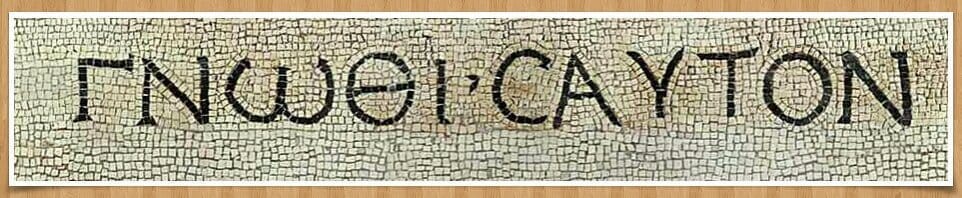
The ancient Greek injunction, ‘Know Thyself,’ is inscribed in the forecourt of the Temple of Apollo at Delphi.